Taking mass transit is great. But when you step off your train or bus, what do you do to get to your final destination? Increasingly, that means BYO wheels: a bike, e-bike or scooter. The problem is, the rules for bringing your “wheels” is much different depending on your carrier. METRO-NORTH:
You can bring your non-electric-powered bike on the train anytime except rush-hour.
Why is much of Connecticut talking about a bridge from Bridgeport, across Long Island Sound, to New York State? How did we get sucked into a debate about a project that every transportation expert I spoke with said just won’t happen? You can blame (or maybe credit?) Connecticut housing developer Stephen Shapiro for this distraction as he pipe-dreams way outside his area of expertise. “A reporter from The CT Post called me to talk about housing,” he told WFSB’s “CT ‘25”. “I always liked the idea of a bridge. And now this thing has ballooned into a massive story.”
He even helped by generating a lovely artificial intelligence image of the structure, complete with red, white and blue towers, which was gobbled up by the media. A 14-mile bridge, costing a guesstimated $50 billion? It’s a good thing Shapiro didn’t dangle the idea of flying cars to the reporter. Shapiro has never built a bridge. His expertise is in affordable housing projects in cities like Bristol, Fairfield, Milford and Easton. That’s great, and certainly needed. But a bridge?
What would happen to you if you borrowed your company’s car and, thanks to built-in tracking technology, were caught driving 113 mph? Or how would your HR staff “dialogue” with you if the car’s mileage wasn’t properly logged, you had apparently used it for personal trips, then left it sitting in a garage, and when you did return it to the motor pool it had $3,500 in damage? This isn’t a hypothetical question. These are actual cases of state employees, including former Chief of Staff to Gov. Ned Lamont, Jonathan Dach. All of this comes to light in the latest detailed report from the Auditors of Public Accounts, a non-partisan, independent body appointed by the Legislature.
I finally had a chance to ride the new NextGen Acela and I have to admit, I was wrong: this really is Amtrak’s train of the future. But here are a few tips for making your next ride frictionless. These tips are mostly about riding Acela, but many hold true for slower Northeast Corridor trains. WHAT’S A NEXTGEN ACELA? These are the new trains built by Alstom, previously known as Avelia Liberty.
How many of you remember “Car Talk”, the wildly popular NPR show with Tom and Ray Magliozzi, also known as “Click and Clack, the Tappet Brothers”? Not only were they brothers, but both graduated from MIT. They were walking encyclopedias of automotive wisdom. And common sense. To them, car safety meant more than just mechanics.
As if our roads weren’t dangerous enough already, there’s a new generation of “micro-mobility” silently swishing around our streets for us to worry about: electric scooters and skateboards. The scooters (at a cost of about $1,400) can go 30 mph. The skateboards (about $700) top out at 32 mph. But following simple instructions on the web, the speed governor can be disabled allowing even faster speeds — up to 60 mph. That modification is illegal in Connecticut.
I’ve always thought of Labor Day as New Year’s Eve. After a summer of vacations the new business year has begun and we’re back to the grind. But while you’ve been enjoying the summer (me, too!) we need to get updated on what’s been happening on our roads, rails and waters. TRAFFIC DEATHS DOWN SLIGHTLY: On a hopeful note, only 143 highway deaths have been tallied in our state as of mid-August — hopeful, compared to 196 deaths by the same time last year. Credit should go to the state and local police agencies for cracking down on reckless drivers and speeders.
Rounding out our Summer re-run series, here’s a column from 2023 about a most determined hiker! Five years ago now, Diana Jackson was walking 2,192 miles. The Darien native is one of over 3,300 people each year who try to walk the entire length of the Appalachian Trail (the AT), from Georgia to Maine. But she’s one of the 25% of them that actually completed the task. She learned to hike with her parents in the White Mountains of New Hampshire and at age seven announced her goal of making the entire trek.
In the history of American transportation, there is one crucial intersection between the railroads and civil rights: the formation, exactly 100 years ago this week, in August 1925, of the Brotherhood of Sleeping Car porters by A. Phillip Randolph. This was the first predominantly African-American labor union in the U.S.
Pullman Cars
It was in 1862 that George Pullman launched the first deluxe railroad sleeping cars bearing his name. They were an instant hit, offering middle and upper-class passengers the comforts of home while on the rails. All of the Pullman car conductors were white but the porters (who tended to the passengers) were black. Many of them were former slaves.
Amtrak’s oldest new trains are arriving shortly: The NextGen Acela (finally) starts running between Washington and Boston on Thursday, Aug. 28. Ordered in 2016 for $1.8 billion, the first trains arrived from the Alstom assembly facility in Hornell, New York in 2020. That meant jobs there for 1300 workers and business for 180 suppliers across 29 states. These new trains are 95% “made in the USA”.
Continuing our summer reprise of some older columns, here’s an update on memories of years past…
This week marks the 56th anniversary of the grand-daddy of all rock festivals … Woodstock. I was in my teens the summer of 1969, but couldn’t get off from my job to join the swarms of rock fans. But I did see most of them. That summer I was as a “temp seasonal” toll collector on the Tappan Zee Bridge, joining Westchester and Rockland counties across the mighty Hudson River. Most days life as a toll collector on the Tappan Zee was a delight, as I was usually assigned to the far outside lane, also known as “the country club” because of its green vistas and views of the mighty Hudson River.
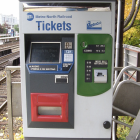
As predicted, fares are going up on Metro-North rides in Connecticut by 5% starting Sept. 1 with another 5% hike coming next July. Rising Price
The final approval came days ago from the MTA, parent of Metro-North, which rubber-stamped the fare hike decision by the Connecticut Department of Transportation. At least one MTA board member called the hikes “scary” and another exclaimed that he was “actually kind of offended.” But, hey — there is nobody on the MTA Board representing Connecticut riders, so they both voted to approve the hike, as did the entire MTA Board. After all, it’s not their money.
How would you feel if your usual means of commuting went on a summer vacation? Riding the ancient Danbury branch of Metro-North is hard enough, but now it’s going to be shut down for two weeks, the trains replaced by buses from Aug. 1 to 17. The 24-mile-long, mostly single-track railroad from South Norwalk to The Hat City carries about 2,000 daily riders at an average speed of 27 mph. Now those riders will get to enjoy the “bustitutes” which will make the journey faster than the train.
Remember when commuting was fun because you could listen to the radio? Earlier in my career I may have been the guy you heard, both on WHCN / Hartford and later on NBC. When I started in radio in 1967, AM Top 40 was king and FM was just getting started. But in 1961 the FCC decreed that all radios should have both AM and FM bands — and that FM should broadcast in stereo. And no longer could station owners just simulcast their AM programs on their FM stations: FM programming had to be different.
Sorry. You’re too late. You missed your chance: the deadline has passed for offering “public comment” on the upcoming fare hikes on Metro-North. Not that anything you might have said would have made a difference to the inevitable: a 5% fare hike on Sept. 1st of this year and another 5% jump in July of 2026.